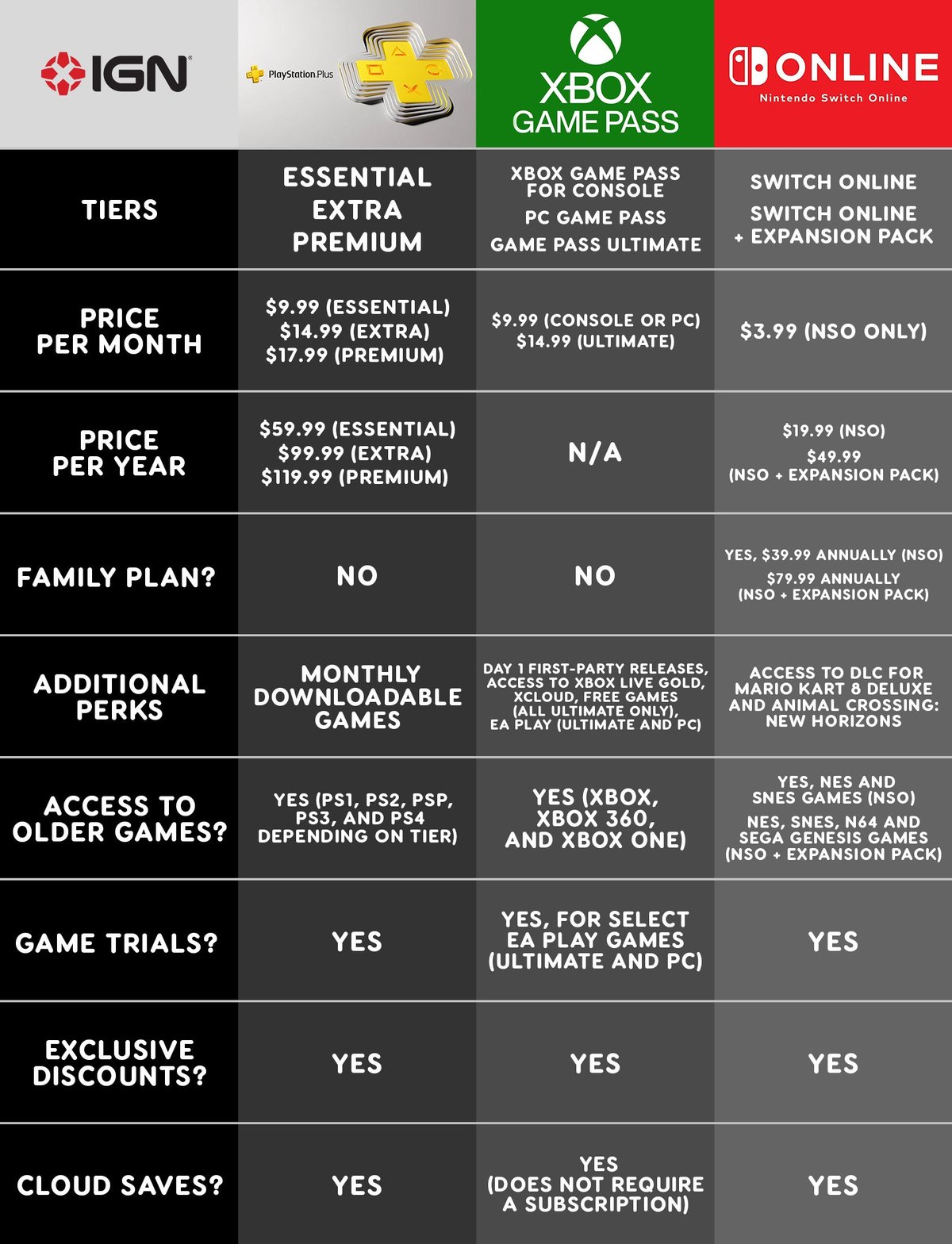
The gaming landscape has transformed dramatically, moving beyond simple console purchases to a world where subscriptions are almost as crucial as the hardware itself. If you're navigating the modern gaming era, you're undoubtedly facing the big question: how does PlayStation Plus vs. Competitors (Xbox Game Pass, Nintendo Switch Online) stack up? This isn't just a battle of features; it's a clash of philosophies, value propositions, and gaming legacies, all vying for your attention and your monthly budget.
As a seasoned player and industry observer, I’ve watched these services evolve from nascent ideas into robust ecosystems. Today, they're not just add-ons; they're integral to the gaming experience, offering everything from online multiplayer to vast libraries of games, cloud streaming, and beloved classics. Deciding which one — or combination — is right for you requires a deep dive, cutting through the marketing noise to reveal the true value beneath.
At a Glance: The Subscription Arena's Quick Lowdown
Before we plunge into the specifics, here's a rapid overview of what each major player brings to the table:
- PlayStation Plus (Sony): Recently rebranded and expanded into three tiers (Essential, Extra, Premium), offering online play, monthly games, and access to a vast catalog of PS4/PS5 titles, plus a deep library of retro games via Premium. No new first-party games on day one.
- Xbox Game Pass (Microsoft): Often dubbed the "Netflix for games," it boasts an enormous, rotating library of titles for Xbox and PC. Its key differentiator is offering all new first-party Xbox games on day one, including those from Bethesda and future Activision-Blizzard studios. Includes cloud gaming with Ultimate.
- Nintendo Switch Online (Nintendo): Focuses primarily on enabling online multiplayer and delivering a curated collection of classic NES, SNES, N64, Sega Genesis, and Game Boy games. The Expansion Pack tier adds more retro titles and significant DLC for some first-party games. It's the most affordable, but less about current-gen libraries.
PlayStation Plus: Sony's Reimagined Offering
Sony made significant waves when it overhauled its PlayStation Plus service in June, consolidating the existing PS Plus with the cloud-streaming capabilities of PlayStation Now. This strategic move was clearly designed to beef up its competitive stance, offering more compelling features and a tiered structure that aims to cater to different types of players. It’s no longer just about online multiplayer; it’s about a comprehensive content catalog and a nod to PlayStation’s rich history.
The Big Rebrand: PS Plus & PS Now Combined
The core idea behind the new PlayStation Plus was simplification and expansion. Previously, you might have paid for PS Plus for online multiplayer and free monthly games, and separately for PS Now for cloud streaming and a catalog of older titles. Now, it's all under one roof, with your chosen tier determining your access level. This consolidation makes it easier to understand and, crucially, adds significant value, especially to the higher tiers. Existing PS Now owners transitioned smoothly into the Premium tier without a price hike, which was a welcome move.
Tiers Explained: Finding Your PS Plus Fit
The new structure provides three distinct entry points, each building upon the last.
Essential: The Foundation
This is the spiritual successor to the original PlayStation Plus. It’s the baseline for most PlayStation gamers.
- Online Multiplayer Access: If you want to play Call of Duty or FIFA online with friends, this is non-negotiable.
- Monthly Free Games: Typically 3 curated PS4 and/or PS5 titles per month. Once claimed, they’re yours to play as long as your subscription is active. This is a great way to discover new games or revisit older gems without an extra purchase.
- Exclusive Discounts: Members often get deeper discounts on digital games, DLC, and other items in the PlayStation Store during sales events.
- Cloud Storage: Essential for backing up your game saves, ensuring your progress is safe and accessible across different consoles if needed.
Extra: Diving into the Game Catalog
Stepping up to the Extra tier is where PlayStation Plus starts to truly resemble a "library" service. It includes everything from Essential, then dramatically expands your gaming options.
- Hundreds of PS4 and PS5 Games: This is the headline feature. You get access to a large, downloadable library of both first-party (Sony Studios) and third-party titles. Think of it as a curated selection designed to offer something for everyone, from critically acclaimed AAA adventures to charming indie darlings.
- Regular Additions: Sony commits to adding approximately 10-15 new curated titles monthly, keeping the catalog fresh and giving you new reasons to explore. This ensures there's always something new to dive into.
Premium: The Ultimate Legacy Experience
The top-tier, Premium, is for the dedicated PlayStation enthusiast, especially those with a soft spot for gaming history. It encompasses all benefits from Essential and Extra, then throws in a wealth of retro and streaming options.
- Classic Game Catalog: Access to a growing library of beloved games from the PS1, PS2, and PSP eras. This is a treasure trove for nostalgia buffs and those who missed out on these classics the first time around.
- PS3 Games via Cloud Streaming: Because the PS5 (and PS4) doesn't offer native backward compatibility for PS3 discs or digital titles, cloud streaming is your primary avenue for experiencing these games. It bypasses the need for an older console, though it requires a stable internet connection.
- Additional Cloud Streaming: Select PS2, PSP, and PS4 games can also be streamed, which is useful if you want to jump into a game without waiting for a large download.
- Time-Limited Game Trials: A unique perk allowing you to play full versions of certain new games for a set number of hours (e.g., 2-5 hours) before deciding whether to buy them. Your progress often carries over if you purchase the full game.
What's Not Day One? First-Party Game Strategy
One crucial distinction for PlayStation Plus is Sony's current strategy regarding new first-party releases. Unlike its main competitor, Sony does not plan to launch its brand-new, marquee titles (like a new God of War or Spider-Man game) directly onto PS Plus on day one. If you want to play these blockbusters at launch, you'll need to buy them separately. This is a deliberate business decision aimed at preserving the full retail price point for its biggest exclusive draws.
Unpacking PS Plus Pricing
The tiered structure comes with corresponding price points, offering flexibility in how you subscribe:
- Essential:
- Monthly: $9.99
- Quarterly: $24.99 (Save $4.98 annually vs. monthly)
- Annually: $79.99 (Save $39.89 annually vs. monthly)
- Extra:
- Monthly: $14.99
- Quarterly: $39.99 (Save $4.98 annually vs. monthly)
- Annually: $134.99 (Save $44.89 annually vs. monthly)
- Premium:
- Monthly: $17.99
- Quarterly: $49.99 (Save $3.98 annually vs. monthly)
- Annually: $159.99 (Save $55.89 annually vs. monthly)
As you can see, committing to an annual plan offers substantial savings across all tiers, making it the most cost-effective way to enjoy PlayStation Plus if you plan to stick with it for the long haul. Considering Is PlayStation Plus worth it?, the annual savings play a significant role in its overall value.
Xbox Game Pass: Microsoft's "Netflix for Games" Dominance
Microsoft's Xbox Game Pass has undeniably set the benchmark for modern gaming subscriptions. Since its inception, it has aggressively positioned itself as the "best value in gaming," a claim backed by a rapidly expanding library and a commitment to day-one first-party releases. It's not just a service; it's a core pillar of Microsoft's entire Xbox ecosystem strategy, aiming to get games into as many hands as possible, regardless of whether they own an Xbox console, a PC, or even just a smartphone.
The Game Pass Philosophy: Access Over Ownership
At its heart, Game Pass embodies the shift from game ownership to game access. Instead of buying individual titles for $60-$70 each, subscribers pay a monthly fee to unlock a rotating catalog of hundreds of games. This model dramatically lowers the barrier to entry for exploring new titles, taking risks on indie games, or catching up on acclaimed blockbusters you might have missed. It fosters a culture of discovery, encouraging players to try games they might never have purchased outright.
Tiers Defined: Your Gateway to Xbox's Library
Game Pass offers a streamlined, yet powerful, tiered structure.
PC/Console: Your Platform-Specific Gateway
These two separate, identically priced tiers offer a robust Game Pass experience tailored to your preferred platform.
- Vast Game Library: Access to hundreds of high-quality games, including many new releases and beloved classics, all optimized for either your Xbox console or your Windows PC. The library varies slightly between console and PC due to platform-specific titles, but both are extensive.
- Discounts: Members enjoy exclusive discounts on games, DLC, and add-ons within the Game Pass library if they decide to purchase them permanently.
- EA Play: Integrated into both PC and Console Game Pass, granting access to a selection of popular EA titles (like FIFA, Battlefield, Mass Effect) and early access trials for new EA games.
Ultimate: The All-Encompassing Package
Xbox Game Pass Ultimate is the flagship tier, combining everything Microsoft has to offer into a single, comprehensive subscription. It's designed for players who want maximum flexibility and value across multiple platforms.
- Everything from PC Game Pass and Console Game Pass: Seamless access to the entire Game Pass library, playable on both your Xbox console and your Windows PC.
- Xbox Live Gold: This is Microsoft's equivalent of PlayStation Plus Essential, providing online multiplayer access for Xbox consoles and a selection of monthly "Games with Gold" (though these are often seen as less significant given the main Game Pass library).
- Xbox Cloud Gaming (Beta): Play a curated selection of Game Pass titles on your Android or iOS device, PC browser, or select smart TVs, all streamed directly from the cloud. This means you can play graphically intensive games without owning a powerful console or PC, as long as you have a strong internet connection and a compatible controller.
- Exclusive Perks: Regular drops of free in-game content, cosmetic items, and other add-ons for popular titles.
- Cross-Platform Support: Many games support cross-play and cross-save, allowing you to start a game on your console and pick it up on your PC or via cloud streaming.
The Day-One Advantage: A Core Game Pass Promise
Here lies one of Game Pass's most significant competitive advantages: Microsoft's unwavering commitment to launching all its first-party games (from Xbox Game Studios, Bethesda, and future acquisitions like Activision-Blizzard) directly onto Game Pass on their release day.
This means when a highly anticipated title like Starfield, Halo Infinite, or Forza Motorsport drops, Game Pass subscribers can play it immediately without an additional purchase. This is a massive draw for many players and a clear differentiator from Sony's current strategy. It democratizes access to big-budget exclusives, making Game Pass an almost mandatory subscription for fans of Microsoft's studios.
A Note on Xbox Backward Compatibility
While Game Pass focuses on its active library, it's worth noting that Xbox consoles (Xbox Series X|S and Xbox One) offer robust backward compatibility. You can play a vast selection of original Xbox, Xbox 360, and Xbox One games, often with enhancements, by simply inserting your old discs or downloading your digitally owned titles. This is separate from Game Pass itself but adds to the overall value proposition of the Xbox ecosystem for players with a long history with the brand.
Xbox Game Pass: Decoding the Cost
Microsoft's pricing structure is straightforward, favoring monthly subscriptions.
- PC Game Pass: $9.99 per month
- Console Game Pass: $9.99 per month
- Game Pass Ultimate: $16.99 per month
- (Note: While monthly is standard, 3-month plans are sometimes available at slight discounts, e.g., PC/Console $29.99, Ultimate $44.99. Annual plans for Ultimate are not standard offerings.)
The lack of annual plans for Ultimate means you're paying a bit more over time compared to PlayStation Plus's annual options, but the day-one releases and comprehensive features often offset this perceived difference in value for many players.
Nintendo Switch Online: The Retro & Multiplayer Hub
Nintendo, ever the innovator with its own distinct path, approaches the subscription service model differently from its rivals. Nintendo Switch Online (NSO) isn't designed to be a sprawling library of current-gen blockbusters; instead, it focuses on enhancing the core Switch experience through online multiplayer and a delightful journey back through Nintendo's storied history. It's a service steeped in nostalgia and community, appealing strongly to a specific segment of the gaming audience.
Nintendo's Unique Approach: Multiplayer and Nostalgia
For Nintendo, the subscription service is primarily about facilitating the social aspects of gaming and celebrating its legendary back catalog. The company doesn't leverage NSO as a primary distribution channel for new, current-gen games. Instead, it ensures you can play Mario Kart 8 Deluxe or Splatoon 3 online and then entices you with a growing vault of retro treasures. This strategy perfectly aligns with Nintendo's brand identity, which often emphasizes unique gameplay, family-friendly fun, and a deep respect for its heritage.
Tiers & Perks: Connecting to the Past and Present
NSO offers two distinct tiers, both built around online functionality and classic games.
Standard NSO: Keeping You Connected
This is the essential tier for any Nintendo Switch owner who wants to engage with multiplayer titles or simply safeguard their game data.
- Online Multiplayer Access: The core reason many subscribe. Without it, you can't play the vast majority of Switch games online with friends or other players.
- Cloud Saves: Crucial for backing up your game progress. If your Switch gets lost, stolen, or damaged, your precious save files are secure in the cloud.
- Nintendo Classic Libraries: Access to a curated, expanding collection of beloved titles from the NES and SNES eras. As of a recent check, this includes dozens of games like Super Mario Bros. 3, The Legend of Zelda: A Link to the Past, Metroid, and many more. New games are added frequently, keeping the retro library fresh.
- Exclusive Offers: Occasional access to special deals, avatar icons, or game trials.
Expansion Pack: Unlocking More Eras and DLC
The Expansion Pack significantly expands the retro offerings and adds a compelling modern perk in the form of bundled DLC.
- Nintendo 64 Game Library: Dive into classics from the N64 era, such as Ocarina of Time, Super Mario 64, and Mario Kart 64. These games often include quality-of-life improvements like save states.
- Sega Genesis Game Library: An unexpected but welcome addition, featuring iconic titles from Sega's 16-bit console, like Sonic the Hedgehog 2 and Streets of Rage 2.
- Game Boy Game Library: Recently added, bringing handheld classics from both the original Game Boy and Game Boy Color to the Switch.
- Bundled DLC for First-Party Games: This is a major value-add. The Expansion Pack includes full access to premium downloadable content for some of Nintendo’s biggest titles, such as the Animal Crossing: Happy Home Paradise expansion and the Mario Kart 8 Deluxe – Booster Course Pass (which adds a staggering 48 new tracks). For players who would buy these DLCs anyway, the Expansion Pack can be an excellent deal.
Nintendo Switch Online: Annual Value
Nintendo's pricing structure is unique in that it's primarily annual, with options for individuals or families. This makes it the most affordable entry point among the three services on an annual basis.
- Individual Plan:
- Annual: $19.99
- Individual + Expansion Pack:
- Annual: $49.99
- Family Plan (up to 8 accounts):
- Annual: $34.99
- Family + Expansion Pack:
- Annual: $79.99
The family plan, especially with the Expansion Pack, offers incredible value for households with multiple Switch owners, allowing up to eight Nintendo Accounts to share the benefits for a single, low annual fee.
Head-to-Head: PlayStation Plus vs. Xbox Game Pass vs. Nintendo Switch Online
Now that we’ve explored each service individually, let's put them side-by-side to highlight their strengths, weaknesses, and what sets them apart. This isn't just about features; it's about discerning which philosophy aligns best with your gaming habits and budget.
The Price Tag Showdown: Which is Easiest on the Wallet?
When it comes to pure affordability, Nintendo Switch Online wins hands down, especially with its individual annual plan at $19.99. Even the Expansion Pack for an individual is less than half the cost of the lowest tier of PS Plus or Game Pass for a year.
- Nintendo Switch Online: The clear budget champion. Its annual-first model offers the lowest barrier to entry.
- PlayStation Plus: Mid-range. Its annual Essential tier ($79.99) is more expensive than NSO but offers more modern game benefits. The higher tiers scale up significantly.
- Xbox Game Pass: The highest monthly cost, particularly for Ultimate ($16.99/month, no standard annual discount), though the value proposition aims to justify this. PC/Console Game Pass at $9.99/month aligns with PS Plus Essential's monthly cost.
Verdict: If price is your absolute top priority and you primarily play on Switch, Nintendo Switch Online is your most economical choice.
Day-One Blockbusters: Who Gets New Games First?
This is arguably the most significant differentiator between Xbox Game Pass and PlayStation Plus.
- Xbox Game Pass: The undisputed champion of day-one releases. Every major first-party game from Xbox Game Studios, Bethesda, and future acquisitions like Activision-Blizzard launches directly into Game Pass. This is a massive draw for players who want to jump into the latest AAA titles without buying them outright.
- PlayStation Plus: Does not offer day-one first-party releases. If you want to play Spider-Man 2 or God of War: Ragnarök at launch, you'll need to purchase them separately. Its library grows over time with older, acclaimed titles.
- Nintendo Switch Online: Doesn't feature day-one access to new Nintendo first-party games in its subscription. New titles are purchased individually.
Verdict: For instant access to new, major first-party games without an extra purchase, Xbox Game Pass stands alone.
A Journey Through Time: Legacy Libraries & Backward Compatibility
Both PlayStation Plus Premium and Nintendo Switch Online lean heavily into nostalgia, but they approach it differently.
- PlayStation Plus Premium: Offers a robust catalog of PS1, PS2, PSP, and (via streaming) PS3 games. This is a comprehensive look back at PlayStation's history, crucial for PS3 titles since PS5 doesn't natively support them. Cloud streaming for some older titles also offers convenience.
- Nintendo Switch Online: Focuses on pure retro gaming, with curated libraries from NES, SNES, N64, Sega Genesis, and Game Boy. These are emulated games, often with added features like rewind and save states. It’s a pure dose of gaming history.
- Xbox Game Pass: While Xbox consoles themselves have impressive backward compatibility for digitally owned or disc-based Xbox, Xbox 360, and Xbox One games, Game Pass itself doesn't primarily focus on a curated subscription library of these older-than-Xbox One titles in the same way PS Plus Premium or NSO does. Its library is more focused on Xbox One and Series X|S generation titles, plus PC games.
Verdict: For diverse retro libraries available through the subscription itself, PS Plus Premium and NSO are the leaders. NSO is pure retro, while PS Plus Premium spans more eras with the addition of streaming.
Overall Value Proposition: Where Do You Get the Most Bang?
"Value" is subjective, but we can look at the breadth and depth of features.
- Xbox Game Pass: Often cited as the industry leader for overall value. Its combination of a vast, rotating library, day-one first-party releases, EA Play, cloud gaming, and Xbox Live Gold in its Ultimate tier is hard to beat for sheer quantity and currency of content. It aims to be a primary gaming hub.
- PlayStation Plus: With its tiered revamp, especially Extra, it's now a very strong contender for value, offering hundreds of downloadable PS4/PS5 games. Premium adds significant retro appeal and game trials. Its value comes from a solid library of modern games plus historical depth.
- Nintendo Switch Online: While very affordable, its value comes from online multiplayer and its retro libraries/DLC, rather than a large, current-gen "Netflix-style" catalog. It's a supplemental service for most, enhancing the Switch experience rather than being the primary source of new games.
Verdict: Xbox Game Pass Ultimate generally offers the broadest and most current value package. PlayStation Plus Extra/Premium provides excellent modern and retro value for its ecosystem. NSO provides excellent value for its specific, more limited scope.
Strategic Philosophies: Differing Paths to Your Gaming Heart
The divergent features and pricing reflect fundamentally different strategies.
- Sony's Evolving Strategy: Sony initially focused on selling individual game copies and consoles. The revamped PS Plus shows adaptation to the subscription trend, creating a more robust service that still encourages full-price purchases for its biggest titles. It's about enhancing the PlayStation ecosystem, not cannibalizing its blockbuster sales.
- Microsoft's Ecosystem Vision: Microsoft sees Game Pass as a central pillar, aiming for broad accessibility across devices. Day-one releases are a major investment, designed to drive Game Pass subscriptions rather than individual game sales, betting on long-term engagement and platform loyalty. It's a "games everywhere" approach.
- Nintendo's Niche Appeal: Nintendo prioritizes its unique hardware and first-party titles. NSO complements this by enabling multiplayer and celebrating its heritage, without trying to compete directly in the "Netflix of games" space. It's about enhancing the distinct Nintendo experience.
Choosing Your Champion: Which Service is Right for You?
The "best" service isn't universal; it's deeply personal. Here’s how to weigh your options based on your gaming habits and priorities.
You're a PlayStation Fan if...
- You primarily game on a PS4 or PS5: This is almost a given.
- You want online multiplayer for your PlayStation games.
- You enjoy discovering 2-3 new games each month to keep (with an active subscription) via Essential.
- You’re keen to explore a vast library of PS4 and PS5 games (Extra tier). You don't mind playing games that aren't brand-new releases, but still critically acclaimed.
- You have a deep love for PlayStation's past (PS1, PS2, PSP, PS3) and want access to these classics without digging out old consoles (Premium tier).
- You don't mind buying the biggest new PlayStation exclusives at full price on day one.
- You appreciate time-limited game trials to "try before you buy" on new releases (Premium tier).
You're an Xbox Enthusiast if...
- You play on an Xbox console (Series X|S, Xbox One) and/or a Windows PC.
- You demand day-one access to all new first-party Xbox, Bethesda, and Activision-Blizzard games. This is a non-negotiable for you.
- You want a massive, ever-changing library of games for a single monthly fee.
- You're interested in cloud gaming, playing high-fidelity titles on devices like your phone or tablet (Ultimate tier).
- You value the inclusion of EA Play for a selection of EA titles and trials.
- You want a single subscription that covers online multiplayer, a game library, and PC gaming (Ultimate tier).
You're a Nintendo Devotee if...
- You primarily game on a Nintendo Switch.
- Online multiplayer for games like Mario Kart or Splatoon is essential to your gaming.
- Cloud saves for your Switch games are a must-have for peace of mind.
- You have a strong sense of nostalgia and want to revisit games from the NES, SNES, N64, Sega Genesis, and Game Boy eras.
- You plan to purchase major first-party DLCs like the Mario Kart 8 Deluxe Booster Course Pass or Animal Crossing: Happy Home Paradise, as the Expansion Pack bundles these for great value.
- You appreciate the most budget-friendly annual subscription option.
Considering Multi-Platform Play
What if you own multiple consoles? Many gamers do!
- PS Plus Extra/Premium + Xbox Game Pass Ultimate: This combination gives you the best of both worlds – Sony's exclusives and vast library, plus Microsoft's day-one blockbusters and cloud gaming. It's the most expensive option but offers the broadest access to modern gaming content across two major ecosystems.
- Any combination + Nintendo Switch Online (Expansion Pack): NSO is an excellent supplementary service. Its unique retro library and bundled DLC complement rather than overlap with PS Plus or Game Pass, making it an easy add-on for Switch owners who want to get the most out of their console.
Ultimately, look at your primary console, the types of games you play most, and your budget. Think about whether you prioritize new releases, a vast catalog of existing games, or a trip down memory lane.
Common Questions & Unpacked Realities
Let’s clear up some lingering questions about these subscription services.
Can I subscribe to all three?
Absolutely! Many dedicated gamers subscribe to two or even all three services. Each offers a distinct value proposition, so they often complement each other rather than directly competing for the exact same type of gaming experience. For instance, you could have Game Pass Ultimate for new blockbusters on Xbox/PC and PS Plus Extra for Sony exclusives and its broader library, plus NSO Expansion Pack for retro gaming on the go.
Do I own the games forever?
No. With all three services, you do not "own" the games in their libraries. Your access to these games is tied to your active subscription. If your subscription lapses, you lose access to all games obtained through the service's library (not games you've purchased outright). The "free monthly games" from PS Plus Essential and Xbox Live Gold are also only playable as long as your subscription remains active.
What happens if a game leaves the service?
Games in the rotating libraries (PS Plus Extra/Premium, Xbox Game Pass) can and do leave the service. Publishers may pull their titles after a certain period. Usually, services provide advance notice. If a game you love is leaving, you'll often get an exclusive discount to purchase it permanently if you wish to keep playing it after it departs the subscription catalog. Games you’ve purchased outside the subscription are unaffected.
Are the "free" monthly games truly free?
The games offered monthly by PlayStation Plus Essential and Xbox Live Gold (part of Game Pass Ultimate) are "free to claim" but "rented." You can download and play them as long as your subscription is active. If you stop subscribing, you lose access. If you resubscribe later, access is typically restored.
The Bottom Line: Navigating the Future of Gaming Subscriptions
The age of gaming subscriptions is here to stay, and Sony, Microsoft, and Nintendo have each carved out compelling, yet distinct, offerings. There’s no single “winner” in this showdown because each service excels in different areas, catering to varying gamer needs and preferences.
- For the budget-conscious retro fan and social Switch player: Nintendo Switch Online is an unbeatable value.
- For the modern PlayStation owner who wants a vast library of acclaimed PS4/PS5 games and a deep dive into PlayStation's history: PlayStation Plus Extra or Premium delivers immense value.
- For the player who demands immediate access to the biggest new blockbusters from Xbox studios, plus a massive, dynamic library across console, PC, and cloud: Xbox Game Pass Ultimate is the gold standard.
Take an honest look at your primary console, the types of games you prioritize, and how much you're willing to spend. Whether you choose one, two, or all three, these services offer unprecedented access to gaming content, changing how we play, discover, and enjoy our favorite pastime. The best choice is the one that brings the most joy and value to your unique gaming experience.